
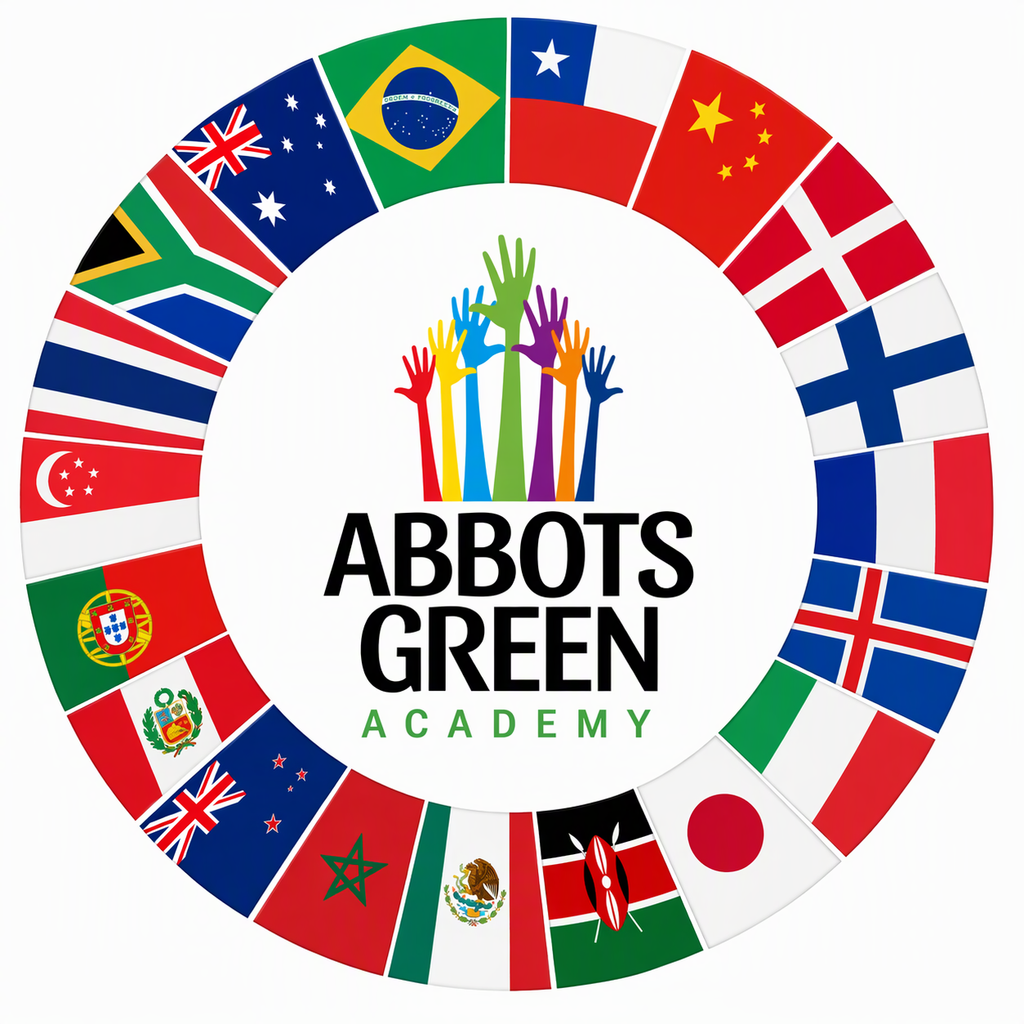
At Abbots Green, we pride ourselves in creating a community where we’re all proud to belong, as individuals. We believe that our community is defined not just by who is inside our building, but by the world our children are preparing to enter. Whilst our local area may be uniform in its demographics, we use country names to ignite a school full of cultural differences alongside classes with their own individual identity. By looking outward, we ensure our pupils leave with the cultural fluency, open-mindedness, and empathy required to thrive as global citizens.
Using country names as class names fosters a sense of belonging by embracing the children’s collective identity in a global community, ensuring every child feels represented, valued, and connected to the wider world.
We have intentionally linked daily learning environments to the concepts of identity, diversity, and global citizenship. This strengthens the pupils’ sense of belonging:
- Promotes Global Representation: Seeing different countries celebrated as class names helps children – especially those from diverse or international backgrounds – feel that their heritage is recognised and that they belong.
- Building a Shared Collective Identity: Instead of being just a number or a letter, a class named after a country gives students a unique, shared community identity.
- Recognises Nationality and Roots: Every child has a right to a name and a nationality. Aligning classroom spaces with world countries helps children explore their own name and nationality, validating their place in both their local school and the broader global landscape.
- Encourages Cultural Curiosity: It normalises talking about different cultural landscapes, origins, and stories. This reduces the feeling of otherness and ensures that differences are celebrated rather than marginalised.
Can you name all the class names in our school?